
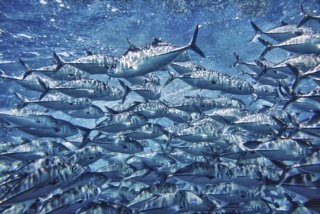
Credit: Courtesy Worldwide Fund for Nature (WWF-SA)
In Zimbabwe, a significant portion of human deaths caused by large wildlife can be attributed to Nile crocodiles and African elephants. According to data collected between 2016 and 2022, approximately 83% of all fatalities from big game attacks were linked to these two species. Specifically, 165 people died due to crocodile attacks, both within and outside protected areas, while 103 individuals lost their lives following encounters with elephants. A study published in Scientific Reports highlights that the number of such incidents is on the rise.
“In contrast, fatalities involving lions, hyenas, hippos, and buffaloes showed no significant increase,” explains Blessing Kavhu, the lead author of the study from the University of California and Stellenbosch University.
The research, based on verified records from the Zimbabwe Parks and Wildlife Management Authority (ZimParks), indicates that hippos caused the death of 20 people, buffaloes 19, and lions 9. A map illustrating the locations of these fatal incidents shows that most occurred in the Kariba, Binga, and Hwange districts in northern and western Zimbabwe, where communities often live near or within wildlife habitats.
The researchers emphasize that data-driven strategies tailored to specific species could help improve coexistence between humans and wildlife, ultimately supporting better conservation efforts.
Understanding Ancient Sahara Lakes
The Tibesti Mountains, the largest and highest mountain range in the Sahara Desert, once held deep, high-altitude lakes. Today, only wide and steep dry craters remain as evidence of these ancient water bodies. To uncover how these lakes formed, German scientists explored the geological history of the central Sahara.
Their study, published in Nature Communications, revealed that during the mid-Holocene period, the Tibesti Mountains received significantly more water than surrounding areas due to strong orographic uplift—when moist air rises upon encountering a mountain. Surprisingly, the researchers found that this moisture came from north-easterly winds originating in the Mediterranean, rather than the stronger West African monsoon from the south.
The findings are based on sedimentary data, high-resolution paleoclimate simulations, and water balance modeling of the Sahara and Sahel regions. The team suggests that current climate models predicting a wetter and greener Sahel and Southern Sahara may not account for the impact of the Tibesti’s steep slopes on atmospheric circulation. This oversight could lead to underestimations of potential future water sources and the risks of extreme hydrological events in the region.
The Nutritional Value of Dried Fish
A recent analysis published in PNAS examined 19 common freshwater and coastal fish species and found that small portions of dried fish can contribute up to 15% of a person’s recommended intake of essential nutrients such as calcium, iron, zinc, and vitamins B12 and D.
Based on large-scale survey data from Côte d’Ivoire, Ghana, Malawi, Nigeria, Tanzania, and Uganda, it was discovered that around 36% of households across East and West African countries consume dried fish, regardless of income level. In fact, 54% more people tend to eat dried fish more regularly than fresh fish.
An international research team, including scientists from Ghana and Kenya, recommends that dried fish should be more widely recognized as part of complementary feeding programs, malnutrition treatment products, school feeding initiatives, and national food aid schemes. Their findings highlight the importance of integrating dried fish into public health and nutrition strategies.

Leave a Reply
You must be logged in to post a comment.